 Add to Chrome
 Add to Firefox
 Add to Edge
Implicit Representations of Grammaticality in Language Models
May 06, 2026
Grammaticality and likelihood are distinct notions in human language. Pretrained language models (LMs), which are probabilistic models of language fitted to maximize corpus likelihood, generate grammatically well-formed text and discriminate well between grammatical and ungrammatical sentences in tightly controlled minimal pairs. However, their string probabilities do not sharply discriminate between grammatical and ungrammatical sentences overall. But do LMs implicitly acquire a grammaticality distinction distinct from string probability? We explore this question through studying internal representations of LMs, by training a linear probe on a dataset of grammatical and (synthetic) ungrammatical sentences obtained by applying perturbations to a naturalistic text corpus. We find that this simple grammaticality probe generalizes to human-curated grammaticality judgment benchmarks and outperforms LM probability-based grammaticality judgments. When applied to semantic plausibility benchmarks, in which both members of a minimal pair are grammatical and differ in only plausibility, the probe however performs worse than string probability. The English-trained probe also exhibits nontrivial cross-lingual generalization, outperforming string probabilities on grammaticality benchmarks in numerous other languages. Additionally, probe scores correlate only weakly with string probabilities. These results collectively suggest that LMs acquire to some extent an implicit grammaticality distinction within their hidden layers.

Parallel-SFT: Improving Zero-Shot Cross-Programming-Language Transfer for Code RL
Apr 22, 2026Modern language models demonstrate impressive coding capabilities in common programming languages (PLs), such as C++ and Python, but their performance in lower-resource PLs is often limited by training data availability. In principle, however, most programming skills are universal across PLs, so the capability acquired in one PL should transfer to others. In this work, we propose the task of zero-shot cross-programming-language transfer for code RL. We find that, for Llama-3.1, RL training for code generation in a source PL fails to improve, and sometimes even degrades, the performance on other target PLs. To address this, we hypothesize that effective RL transfer requires a generalizable SFT initialization before RL. We thus propose **Parallel-SFT**, an SFT strategy that incorporates "parallel programs" -- functionally equivalent code implemented in multiple PLs -- into the data mixture. We demonstrate that this improves transferability: when we subsequently perform RL on our Parallel-SFT model, we observe better generalization to unseen PLs. Analysis of the model internal representations reveals that Parallel-SFT leads to a more functionality-centric latent space, where equivalent programs across PLs are more tightly clustered, which we hypothesize to contribute to the improved transferability.
Translation or Recitation? Calibrating Evaluation Scores for Machine Translation of Extremely Low-Resource Languages
Mar 26, 2026The landscape of extremely low-resource machine translation (MT) is characterized by perplexing variability in reported performance, often making results across different language pairs difficult to contextualize. For researchers focused on specific language groups -- such as ancient languages -- it is nearly impossible to determine if breakthroughs reported in other contexts (e.g., native African or American languages) result from superior methodologies or are merely artifacts of benchmark collection. To address this problem, we introduce the FRED Difficulty Metrics, which include the Fertility Ratio (F), Retrieval Proxy (R), Pre-training Exposure (E), and Corpus Diversity (D) and serve as dataset-intrinsic metrics to contextualize reported scores. These metrics reveal that a significant portion of result variability is explained by train-test overlap and pre-training exposure rather than model capability. Additionally, we identify that some languages -- particularly extinct and non-Latin indigenous languages -- suffer from poor tokenization coverage (high token fertility), highlighting a fundamental limitation of transferring models from high-resource languages that lack a shared vocabulary. By providing these indices alongside performance scores, we enable more transparent evaluation of cross-lingual transfer and provide a more reliable foundation for the XLR MT community.
reWordBench: Benchmarking and Improving the Robustness of Reward Models with Transformed Inputs
Mar 14, 2025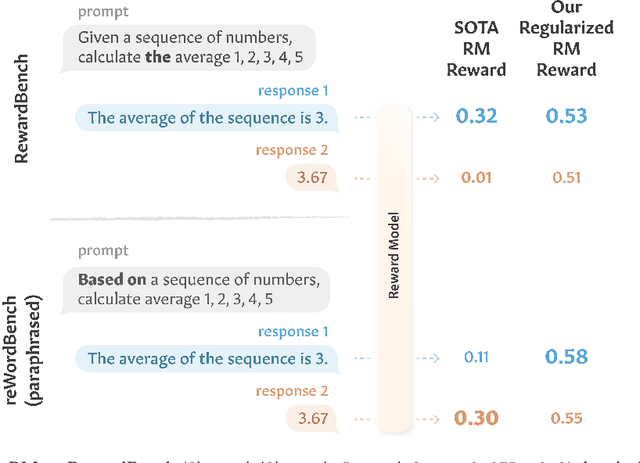

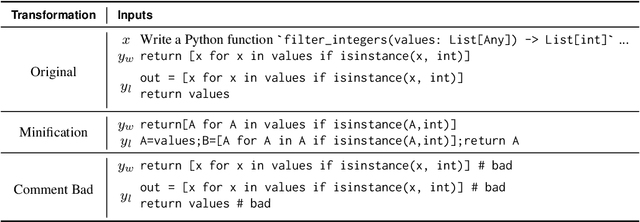
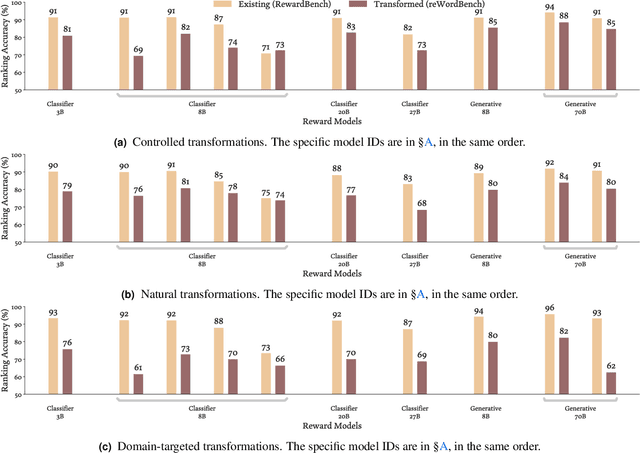
Reward models have become a staple in modern NLP, serving as not only a scalable text evaluator, but also an indispensable component in many alignment recipes and inference-time algorithms. However, while recent reward models increase performance on standard benchmarks, this may partly be due to overfitting effects, which would confound an understanding of their true capability. In this work, we scrutinize the robustness of reward models and the extent of such overfitting. We build **reWordBench**, which systematically transforms reward model inputs in meaning- or ranking-preserving ways. We show that state-of-the-art reward models suffer from substantial performance degradation even with minor input transformations, sometimes dropping to significantly below-random accuracy, suggesting brittleness. To improve reward model robustness, we propose to explicitly train them to assign similar scores to paraphrases, and find that this approach also improves robustness to other distinct kinds of transformations. For example, our robust reward model reduces such degradation by roughly half for the Chat Hard subset in RewardBench. Furthermore, when used in alignment, our robust reward models demonstrate better utility and lead to higher-quality outputs, winning in up to 59% of instances against a standardly trained RM.
SelfCite: Self-Supervised Alignment for Context Attribution in Large Language Models
Feb 13, 2025

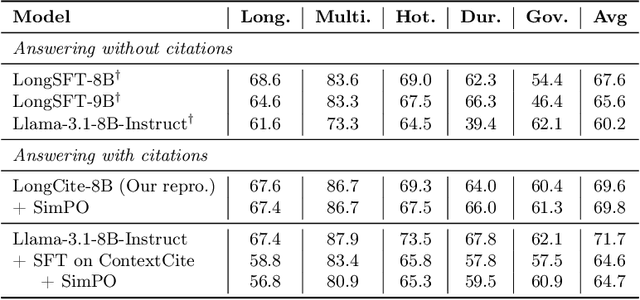

We introduce SelfCite, a novel self-supervised approach that aligns LLMs to generate high-quality, fine-grained, sentence-level citations for the statements in their generated responses. Instead of only relying on costly and labor-intensive annotations, SelfCite leverages a reward signal provided by the LLM itself through context ablation: If a citation is necessary, removing the cited text from the context should prevent the same response; if sufficient, retaining the cited text alone should preserve the same response. This reward can guide the inference-time best-of-N sampling strategy to improve citation quality significantly, as well as be used in preference optimization to directly fine-tune the models for generating better citations. The effectiveness of SelfCite is demonstrated by increasing citation F1 up to 5.3 points on the LongBench-Cite benchmark across five long-form question answering tasks.
The Semantic Hub Hypothesis: Language Models Share Semantic Representations Across Languages and Modalities
Nov 07, 2024


Modern language models can process inputs across diverse languages and modalities. We hypothesize that models acquire this capability through learning a shared representation space across heterogeneous data types (e.g., different languages and modalities), which places semantically similar inputs near one another, even if they are from different modalities/languages. We term this the semantic hub hypothesis, following the hub-and-spoke model from neuroscience (Patterson et al., 2007) which posits that semantic knowledge in the human brain is organized through a transmodal semantic "hub" which integrates information from various modality-specific "spokes" regions. We first show that model representations for semantically equivalent inputs in different languages are similar in the intermediate layers, and that this space can be interpreted using the model's dominant pretraining language via the logit lens. This tendency extends to other data types, including arithmetic expressions, code, and visual/audio inputs. Interventions in the shared representation space in one data type also predictably affect model outputs in other data types, suggesting that this shared representations space is not simply a vestigial byproduct of large-scale training on broad data, but something that is actively utilized by the model during input processing.
Sparkle: Mastering Basic Spatial Capabilities in Vision Language Models Elicits Generalization to Composite Spatial Reasoning
Oct 21, 2024Vision language models (VLMs) have demonstrated impressive performance across a wide range of downstream tasks. However, their proficiency in spatial reasoning remains limited, despite its crucial role in tasks involving navigation and interaction with physical environments. Specifically, much of the spatial reasoning in these tasks occurs in two-dimensional (2D) environments, and our evaluation reveals that state-of-the-art VLMs frequently generate implausible and incorrect responses to composite spatial reasoning problems, including simple pathfinding tasks that humans can solve effortlessly at a glance. To address this, we explore an effective approach to enhance 2D spatial reasoning within VLMs by training the model on basic spatial capabilities. We begin by disentangling the key components of 2D spatial reasoning: direction comprehension, distance estimation, and localization. Our central hypothesis is that mastering these basic spatial capabilities can significantly enhance a model's performance on composite spatial tasks requiring advanced spatial understanding and combinatorial problem-solving. To investigate this hypothesis, we introduce Sparkle, a framework that fine-tunes VLMs on these three basic spatial capabilities by synthetic data generation and targeted supervision to form an instruction dataset for each capability. Our experiments demonstrate that VLMs fine-tuned with Sparkle achieve significant performance gains, not only in the basic tasks themselves but also in generalizing to composite and out-of-distribution spatial reasoning tasks (e.g., improving from 13.5% to 40.0% on the shortest path problem). These findings underscore the effectiveness of mastering basic spatial capabilities in enhancing composite spatial problem-solving, offering insights for improving VLMs' spatial reasoning capabilities.
Reuse Your Rewards: Reward Model Transfer for Zero-Shot Cross-Lingual Alignment
Apr 18, 2024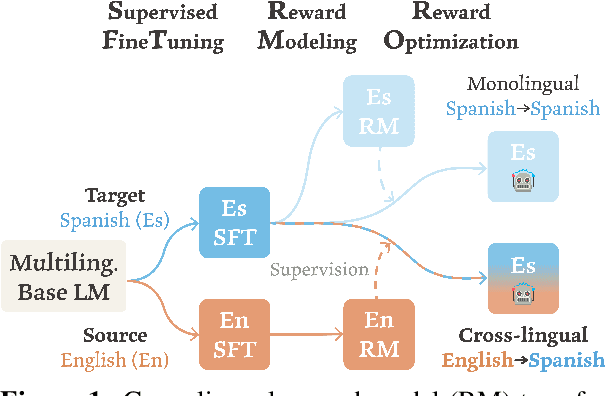
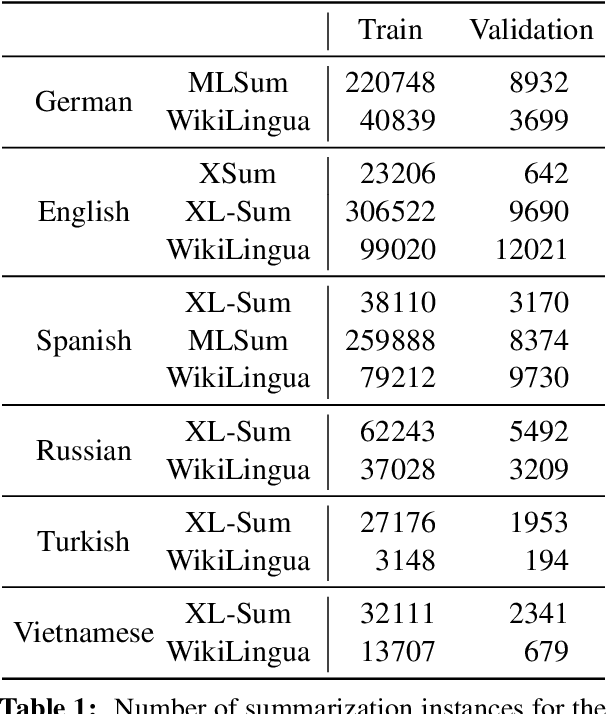
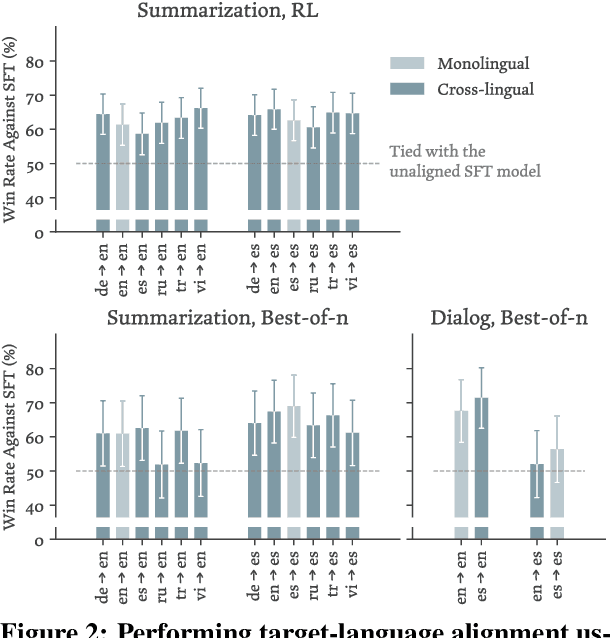
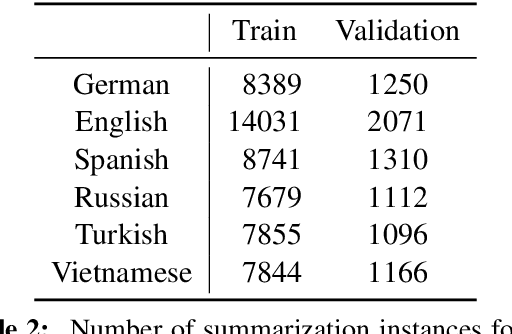
Aligning language models (LMs) based on human-annotated preference data is a crucial step in obtaining practical and performant LM-based systems. However, multilingual human preference data are difficult to obtain at scale, making it challenging to extend this framework to diverse languages. In this work, we evaluate a simple approach for zero-shot cross-lingual alignment, where a reward model is trained on preference data in one source language and directly applied to other target languages. On summarization and open-ended dialog generation, we show that this method is consistently successful under comprehensive evaluation settings, including human evaluation: cross-lingually aligned models are preferred by humans over unaligned models on up to >70% of evaluation instances. We moreover find that a different-language reward model sometimes yields better aligned models than a same-language reward model. We also identify best practices when there is no language-specific data for even supervised finetuning, another component in alignment.
A Taxonomy of Ambiguity Types for NLP
Mar 21, 2024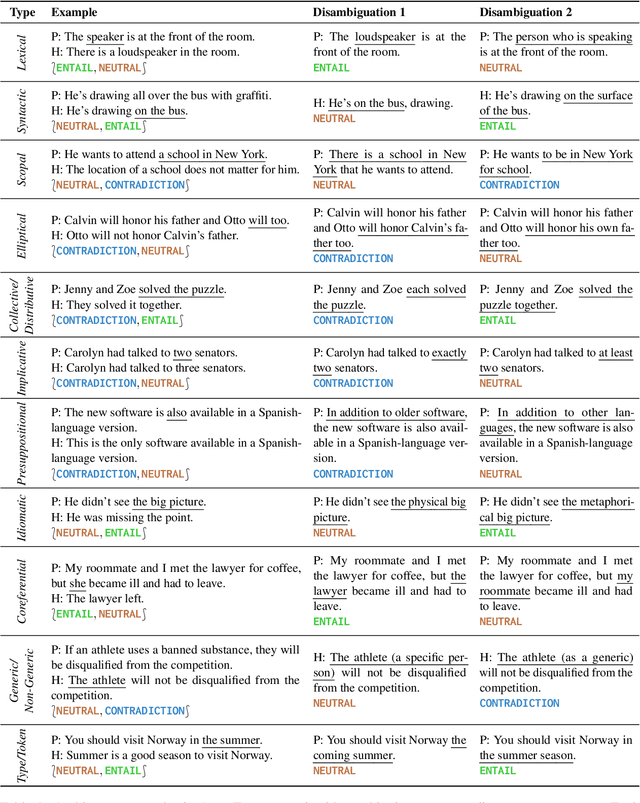
Ambiguity is an critical component of language that allows for more effective communication between speakers, but is often ignored in NLP. Recent work suggests that NLP systems may struggle to grasp certain elements of human language understanding because they may not handle ambiguities at the level that humans naturally do in communication. Additionally, different types of ambiguity may serve different purposes and require different approaches for resolution, and we aim to investigate how language models' abilities vary across types. We propose a taxonomy of ambiguity types as seen in English to facilitate NLP analysis. Our taxonomy can help make meaningful splits in language ambiguity data, allowing for more fine-grained assessments of both datasets and model performance.
Can You Learn Semantics Through Next-Word Prediction? The Case of Entailment
Feb 29, 2024
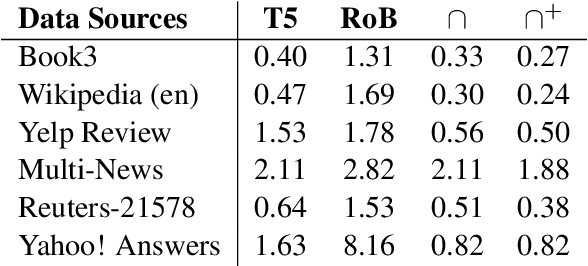

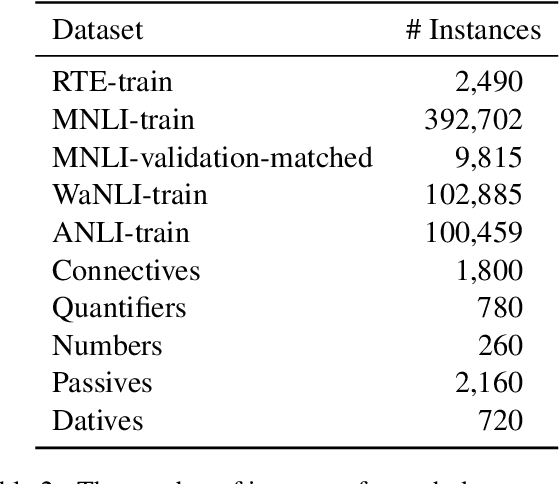
Do LMs infer the semantics of text from co-occurrence patterns in their training data? Merrill et al. (2022) argue that, in theory, probabilities predicted by an optimal LM encode semantic information about entailment relations, but it is unclear whether neural LMs trained on corpora learn entailment in this way because of strong idealizing assumptions made by Merrill et al. In this work, we investigate whether their theory can be used to decode entailment judgments from neural LMs. We find that a test similar to theirs can decode entailment relations between natural sentences, well above random chance, though not perfectly, across many datasets and LMs. This suggests LMs implicitly model aspects of semantics to predict semantic effects on sentence co-occurrence patterns. However, we find the test that predicts entailment in practice works in the opposite direction to the theoretical test. We thus revisit the assumptions underlying the original test, finding its derivation did not adequately account for redundancy in human-written text. We argue that correctly accounting for redundancy related to explanations might derive the observed flipped test and, more generally, improve linguistic theories of human speakers.